
Hard Assert and Soft Assert

In software testing, the terms “Hard Assert” and “Soft Assert” often crop up, playing vital roles in ensuring the reliability and quality of software applications. These two assertion techniques are the gatekeepers of testing, helping to identify and handle issues efficiently. In this article, we’ll dive into Hard Assert and Soft Assert, exploring what they are, how they work, and when to use them effectively.
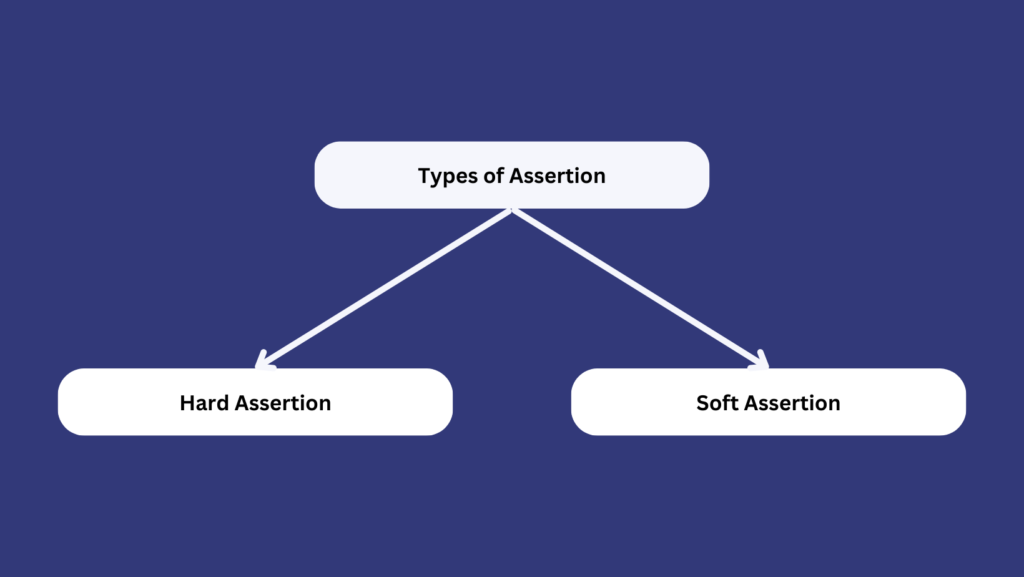
Types of Assertion
Introduction: Hard Assert and Soft Assert
Definition of Hard and Soft Assert
Hard Assert and Soft Assert are assertion methods used in software testing to validate whether certain conditions are met during the execution of test scripts. They act as quality checkpoints, enabling testers to identify software behaviour problems and discrepancies.
Importance of Assertions in Software Testing
Assertions are critical components of software testing as they provide a means to validate expected outcomes. They help maintain the integrity of test scripts, ensuring that they accurately reflect the software’s intended functionality.
Hard Assert
What is a Hard Assert?
A hard Assert is an assertion that immediately stops the execution of a test script when it encounters a failure. If a Hard Assert condition is not met, the test script terminates, and subsequent test steps are not executed.
How Does a Hard Assert Work?
When a Hard Assert is used, the test script checks the specified condition, and if the state is false, an error is thrown, and the test script aborts. This ensures that any subsequent steps, which depend on the success of the preceding steps, are not executed if the initial condition fails.
Use Cases for Hard Assert
Hard Assert is best suited for scenarios where you want the test script to halt immediately upon encountering a problem, ensuring that no further actions are taken without addressing the issue. It’s beneficial for critical validations where the subsequent steps rely on the success of the preceding ones.
Advantages of Hard Assert
The primary advantage of Hard Assert is its ability to pinpoint issues quickly. It helps identify and address problems in the early stages of testing, making debugging more straightforward and efficient.
Disadvantages of Hard Assert
However, the rigidity of Hard Assert can be a drawback in some cases. It may not be suitable for scenarios where you must gather comprehensive test results or perform multiple validations in a single test run.
Hard Assert Example
import org.testng.Assert;
import org.testng.annotations.Test;

public class HardAssertExample {

    @Test
    public void hardAssertionExample() {
        int expected = 10;
        int actual = 5;

        // Performing a hard assertion
        Assert.assertEquals(actual, expected, "Verifying if actual equals expected");

        String expectedStr = "Hello";
        String actualStr = "World";

        // Performing another hard assertion
        Assert.assertEquals(actualStr, expectedStr, "Verifying if actualStr equals expectedStr");

        // The test will stop execution if any assertion fails
    }
}
Soft Assert
What is a Soft Assert?
Soft Assert, on the other hand, is a more flexible assertion method. It allows the test script to continue running even if a validation condition fails, collecting information about all the issues encountered during the test run.
How Does a Soft Assert Work?
With Soft Assert, the test script records the error when a validation condition fails but continues executing the subsequent test steps. This is particularly useful when you want to capture as much data as possible about the application’s state before terminating the test.
Use Cases for Soft Assert
Soft Assert is beneficial when you need to validate multiple aspects of an application and don’t want a single failure to interrupt the entire testing process. It’s also helpful in gathering detailed information about the issues.
Advantages of Soft Assert
The main advantage of Soft Assert is its flexibility. It allows testers to collect comprehensive data about the application’s behaviour in a single test run, making it easier to diagnose complex issues.
Disadvantages of Soft Assert
However, Soft Assert may not be suitable when immediate action is required after a validation failure. It can lead to higher complexity in test scripts and may not be the best choice for critical validations.
Soft Assert Example
import org.testng.asserts.SoftAssert;
import org.testng.annotations.Test;

public class SoftAssertExample {

    @Test
    public void softAssertionExample() {
        SoftAssert softAssert = new SoftAssert();

        int expected = 10;
        int actual = 5;

        softAssert.assertEquals(actual, expected, "Verifying if actual equals expected");

        String expectedStr = "Hello";
        String actualStr = "World";

        softAssert.assertEquals(actualStr, expectedStr, "Verifying if actualStr equals expectedStr");

        // Performing multiple assertions

        int num1 = 15;
        int num2 = 20;

        softAssert.assertTrue(num1 < num2, "Verifying if num1 is less than num2");

        // Collecting all failures
        softAssert.assertAll();
    }
}
When to Use Hard Assert vs. Soft Assert
When to use Hard Assert, or Soft Assert depends on the specific testing scenario and requirements.
Scenarios for Choosing Hard Assert
- Critical validations that require immediate attention.
- Tests where the subsequent steps rely heavily on the success of previous ones.
- Simplicity and straightforwardness are crucial.
Scenarios for Choosing Soft Assert
- Tests where multiple validations need to be executed in a single test run.
- Comprehensive data collection is required to diagnose complex issues.
- Interruptions due to single validation failures are undesirable.
Best Practices for Using Assertions
Effective use of assertions is essential to ensure successful testing. Here are some best practices to consider:
Tips for Effective Assertion Implementation
- Use descriptive messages: Provide clear and informative error messages to facilitate debugging.
- Combine Hard and Soft Assert: In some cases, combining both methods may be the most effective approach.
- Regularly review and update assertions: As the software evolves, ensure your assertions remain relevant.
Common Mistakes to Avoid
- Overuse of Hard Assert: Using Hard Assert for non-critical validations can lead to unnecessary test script interruptions.
- Neglecting to check all assertions: With Soft Assert, reviewing all collected data after the test run is essential.
Conclusion
In software testing, Hard Assert and Soft Assert are indispensable tools for ensuring the quality and reliability of software applications. While Hard Assert is strict and immediate, Soft Assert offers flexibility and comprehensive data collection. Choosing the suitable assertion method depends on the specific testing requirements and the criticality of the validations.
Remember that the key to effective testing lies in knowing when to assert firmly and when to assert softly. By understanding the differences and best practices for each method, testers can confidently navigate the complexities of software testing.
FAQs (Frequently Asked Questions)
What is the primary difference between Hard Assert and Soft Assert?
The primary difference lies in their behaviour when a validation condition fails. Hard Assert immediately terminates the test script while Soft Assert continues running, collecting information about all encountered issues.
Can I combine Hard and Soft Assert in a single test script?
In some scenarios, combining both methods can be the most effective approach. You can use Hard Assert for critical validations and Soft Assert for non-critical ones.
When should I use Hard Assert over Soft Assert?
Hard Assert is ideal for critical validations that require immediate attention, where the subsequent steps rely heavily on the success of the preceding ones, or when simplicity is crucial.
When should I choose Soft Assert over Hard Assert?
Soft Assert is beneficial when executing multiple validations in a single test run, gathering comprehensive data about the application’s behaviour, or avoiding interruptions due to single validation failures.
What are some standard best practices for using assertions effectively?
Use descriptive error messages, consider a combination of assertion methods, and regularly review and update assertions as the software evolves. Avoid overusing Hard Assert for non-critical validations.