
Understanding Business Analysis

Every successful software solution begins with understanding the problem it is meant to solve. But who makes sure that the problem is clearly understood before developers start building the solution?
Imagine a business investing time and money into developing a new system, only to discover that it doesn’t solve the actual problem. This is exactly the kind of situation that effective Business Analysis helps prevent.
Business Analysis is not simply about collecting requirements or writing documents. It is about understanding business needs, asking the right questions, and helping organizations make informed decisions about the solutions they develop.
What Is Business Analysis?
Think of Business Analysis as the detective work behind better business decisions.
It involves exploring how a business operates, identifying challenges, understanding stakeholder needs, and finding opportunities for improvement.
But here’s what makes it interesting: Business Analysis isn’t always about technology. A solution could be a new software system, a simpler workflow, a policy change, or even better employee training.
At its core, Business Analysis helps organizations move from “We have a problem” to “Here’s how we can solve it effectively.”
Who Is a Business Analyst?
Imagine a client explaining what they want, while developers are trying to figure out what they actually need to build. Who makes sure everyone is on the same page?
That’s where a Business Analyst (BA) comes in.
A Business Analyst helps connect business needs with practical solutions. They work with stakeholders, understand expectations, analyse requirements, and help teams deliver solutions that address real business problems.
But a BA is more than just a messenger between clients and developers. They question assumptions, identify missing details, and make sure the team understands not just what needs to be done, but why it matters.
What Does a Business Analyst Actually Do?
A Business Analyst plays an important role throughout a project. Their key responsibilities include:
- Understanding Needs: Identifying business problems and goals.
- Gathering Requirements: Understanding what stakeholders need.
- Analysing Requirements: Clarifying details and identifying gaps.
- Documentation: Preparing clear requirements and user stories.
- Supporting Development: Helping teams understand requirements.
- Validating Solutions: Checking whether the solution meets expectations.
- Managing Changes: Assessing new requests and their impact.
Simply put, a BA helps ensure that the right solution is built for the right problem.
Understanding the Software Development Life Cycle (SDLC)
Ever wondered how a software idea becomes a fully functioning application?
That’s where the Software Development Life Cycle (SDLC) comes in.
SDLC is a structured process that guides software development from planning to maintenance. It helps teams organize their work, maintain quality, and deliver solutions that meet user needs.
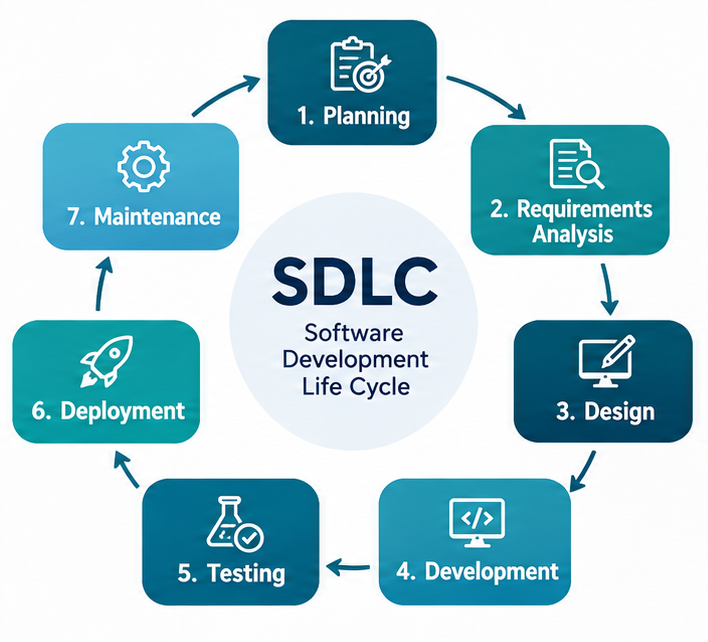
The process generally includes seven stages:
- Planning – Defining project goals, scope, and feasibility.
- Requirements Analysis – Understanding what the system needs to do.
- Design – Planning how the system will look and function.
- Development – Building the actual software.
- Testing – Identifying defects and checking functionality.
- Deployment – Releasing the software to users.
- Maintenance – Fixing issues and making improvements.
These stages may happen sequentially or be repeated throughout development, depending on the approach used.
Agile vs Waterfall: What’s the Difference?
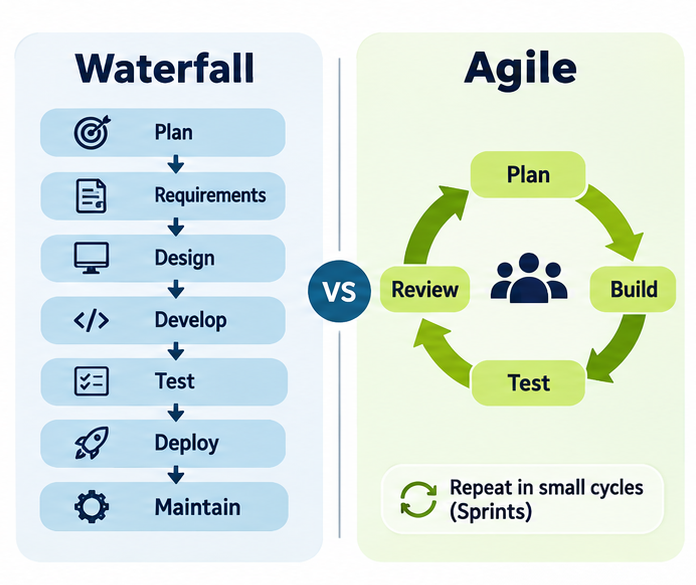
Not every software project follows the same development approach. Two commonly discussed approaches are Agile and Waterfall.
Waterfall follows a step-by-step approach, completing one major phase before moving to the next. It works well when requirements are clear and unlikely to change.
Agile, on the other hand, focuses on flexibility, collaboration, and continuous improvement. Software is developed in smaller increments, allowing teams to gather feedback and adapt to changes.
Key Differences
| Waterfall | Agile |
|---|---|
| Sequential approach | Iterative approach |
| Requirements defined early | Requirements can evolve |
| Changes can be difficult | Changes are easier to accommodate |
| Delivery often occurs near the end | Frequent delivery is encouraged |
| Best suited to stable requirements | Useful when requirements may change |
So, which is better? Neither is always the best choice. It depends on the project’s requirements, complexity, and need for flexibility.
Where Does a Business Analyst Fit In?
Whether a project follows Agile or Waterfall, the goal of a Business Analyst remains the same: ensuring that business needs are understood and addressed.
However, the way a BA works may differ depending on the approach.
- In Waterfall: BAs typically focus more on gathering, analysing, and documenting requirements early in the project, before development begins.
- In Agile: BAs often work continuously with the team, refining requirements, clarifying user stories, and responding to feedback throughout development.
Regardless of the approach, a BA helps connect business expectations with the solution being developed.
In conclusion, Business Analysis is not just about gathering requirements or writing documents. It’s about asking the right questions, understanding business needs, and helping teams deliver meaningful solutions.
From identifying problems to supporting software development, Business Analysts contribute to making sure that technology serves a real purpose.