
Fundamentals of Software Testing

Software testing is a crucial process in the development of any software application. It systematically evaluates software to identify and fix defects, errors, or vulnerabilities before the product is released to end-users. Software testing ensures the final product meets the specified requirements and functions as intended.
The Importance of Software Testing
Ensuring Quality and Reliability: One of the primary purposes of software testing is to ensure the quality and reliability of the software. By identifying and fixing defects early in the development process, software testing helps create a stable and robust product.
Reducing Costs and Time-to-Market: Detecting and rectifying issues during testing is more cost-effective than addressing them after the software is deployed. Moreover, efficient testing reduces the time-to-market, enabling businesses to stay competitive.
Enhancing User Experience: Software testing delivers a seamless user experience. Thorough testing helps discover usability issues and ensures that the software is user-friendly.
Types of Software Testing
Manual Testing: In manual testing, testers execute test cases manually without using any automated tools. This type of testing is suitable for exploratory testing and ad-hoc scenarios.
Automated Testing: Automated testing involves using automated tools to execute test cases. It is ideal for repetitive tests, regression testing, and performance testing.
Functional Testing: Functional testing verifies that the software functions according to the specified requirements and performs its intended tasks accurately.
Non-Functional Testing: Non-functional testing focuses on performance, security, scalability, and software usability.
The Software Testing Process
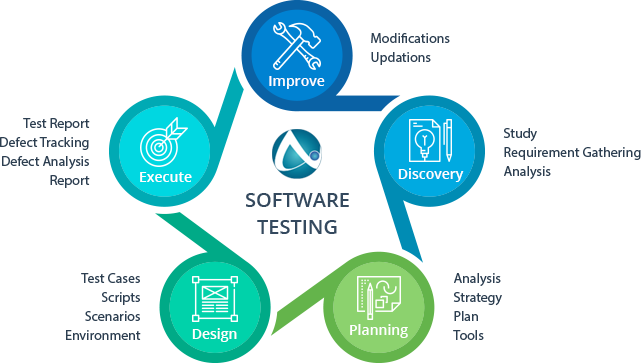
Test Planning: Test planning involves defining the testing objectives, scope, resources, and timelines for the testing process.
Test Design: Test cases are designed based on this phase’s software requirements and specifications.
Test Execution: Testers execute the test cases and record the outcomes, comparing them with expected results.
Defect Reporting and Tracking: Any defects or issues identified during testing are reported, and their status is tracked until they are resolved.
Test Closure: A test summary report is prepared once testing is complete and the testing process is formally closed.
Common Testing Techniques
Unit Testing: Unit testing involves testing individual components or units of the software to ensure their functionality.
Integration Testing: Integration testing validates the interactions between different units to identify integration issues.
Regression Testing: Regression testing ensures that new changes or updates to the software do not negatively impact existing functionalities.
User Acceptance Testing (UAT): UAT involves end-users testing the software to determine if it meets their needs and requirements.
Performance Testing: Performance testing evaluates the software’s responsiveness and stability under various conditions.
Challenges in Software Testing
Complex Software Systems: Testing complex software systems with numerous interconnected components can be challenging.
Time and Resource Constraints: Limited time and resources can affect the extent and thoroughness of testing.
Evolving Requirements: Changing requirements throughout development can make testing more difficult.
Test Data Management: Acquiring and managing suitable test data for comprehensive testing can be problematic.
Best Practices for Effective Software Testing
Early Testing Involvement: Involving testers from the early stages of development helps identify issues at an early stage.
Clear and Measurable Objectives: Defining clear and measurable testing objectives ensures the effectiveness of the testing process.
Test Automation: Utilizing automation tools increases testing efficiency and test coverage.
Comprehensive Test Data: Using diverse and relevant test data enhances testing accuracy.
Continuous Testing: Implementing continuous testing ensures ongoing quality assurance throughout the development lifecycle.
Tools and Frameworks for Software Testing
Selenium: Selenium is a popular open-source testing framework for web applications.
JUnit: JUnit is a widely used testing framework for Java applications.
TestNG: TestNG is a testing framework inspired by JUnit and designed for the Java environment.
Cucumber: Cucumber is a behaviour-driven development (BDD) testing tool.
JIRA: JIRA is a project management and issue-tracking tool that aids test management.
Testing in Agile and DevOps
Agile Testing: Agile testing emphasizes iterative and incremental development with frequent testing and feedback loops.
Continuous Integration and Continuous Testing: In DevOps, continuous integration and continuous testing are integral to development.
Test-Driven Development (TDD): TDD involves writing tests before writing the actual code, promoting higher code quality.
Behavior-Driven Development (BDD): BDD focuses on defining software behaviour in a language understandable by non-technical stakeholders.
The Future of Software Testing
AI in Software Testing: AI and machine learning will revolutionize software testing by automating complex test scenarios and predicting defects.
Shift-Left Testing: Shift-left testing moves testing activities earlier in the development process to identify and address issues sooner.
Internet of Things (IoT) Testing: As IoT devices become more prevalent, specialized testing approaches will be required to ensure their functionality and security.
Software Testing vs Quality Assurance (QA)
While software testing focuses on identifying defects, quality assurance encompasses a broader range of activities to ensure the overall quality of the software development process.
Career Opportunities in Software Testing
Software testing offers various career opportunities, including manual testers, automation engineers, performance testers, and test managers.
Conclusion
In conclusion, software testing is indispensable to software development, ensuring high-quality, reliable, and user-friendly software products. By employing the proper testing techniques, tools, and best practices, businesses can deliver exceptional software that meets user expectations and maintains a competitive edge.